Wednesday, September 26, 2018

European Day of Languages 2018

 Celebrated on September 26th every year since 2001, the European Day of Languages highlights the importance of language learning and cultural diversity. It is a day that reminds us of how languages connect people, open windows to new experiences, and enrich our understanding of the world.

To mark the European Day of Languages in a more creative way, the 6th-grade learners worked together in groups in order to piece together the map of Europe in the form of a puzzle. Each group was given an A4-size part with certain countries, which they coloured collaboratively in the shades of their national flags. Piece by piece, the map came to life, a colourful reminder of the rich diversity of languages and cultures across our continent.

Subsequently they were given photocopies with the country names and the word for “good morning” in each European language. They had to correlate the names with the countries and glue them on the map and, additionally, they were asked to find the nationality related to each country, write it in the space around the map and stick the relevant “good morning” word below it.

The activity not only promoted vocabulary expansion, teamwork, creativity and geographical knowledge, as they connected each country with its name and flag, but also encouraged curiosity, respect, and appreciation for Europe’s cultural heritage!

You can have a look at their creation below!


Friday, September 21, 2018

Numbers around us

 A memorable and creative way for 4th-grade EFL learners to revise numbers from 1 to 20 prior to progressing to higher numbers is to view them  in the context of “numbers around us” , which helps EFL learners connect language with real-life experiences.

 Instead of memorising or consolidating numbers in isolation, students notice them in nature (e.g., 7 colours of the rainbow), in society (e.g., 12 months of the year), and in everyday life (e.g., money, games, sports). This approach strengthens memory, builds vocabulary, and encourages learners to use numbers meaningfully in communication. It also fosters creativity, as students can search for their own examples. Of course they discuss in groups to exchange ideas and the teacher acts as a facilitator providing clues/hints when a group gets stuck.

By linking numbers to the world around them, learners use them naturally and confidently. What’s more, they realize that numbers aren’t just in books —they’re hiding in rainbows, calendars, football scores, and even in board games!

Below you can have a look at two books with the imaginative ideas and creations of 4th-graders.


Tuesday, June 12, 2018

Crafting a dollhouse pictionary

 A fascinating end-of-the-school-year activity for 3rd-graders that can be carried out during their English sessions in June and keep learners motivated and focused is the crafting of a dollhouse. This will be used for revision of the rooms of a house and vocabulary extension through the addition of crafted/drawn furniture with labels in the form of a picture dictionary.

 The necessary materials for the construction of the rooms are cardboard shoe boxes. Regarding the furniture or general decoration, learners will need coloured cardboard sheets/construction paper/or even plain A4 paper for hand drawings, scissors, rulers, glue and coloured markers.

Learners can work in groups and each group can undertake to carry out a different room whereas at the end all the groups have to collaborate productively to construct the house.

This is an activity that improves vocabulary in the target language while promoting STEAM education in the following ways:

·        Science: Students learn about the properties of cardboard and paper such as their flexibility or strength, and how they behave when cut, bent, or glued.

·        Technology: They handle simple tools and practise their fine motor skills while testing processes used in architecture and product design.

·        Engineering: They learn problem-solving while considering issues of balance or weight distribution.

·        Arts: Painting, decorating, designing furniture, and deciding on the house layout promotes creative expression.

·        Mathematics: Learners use rulers to measure cardboard accurately which helps them reinforce concepts of length, width or height. At the same time they are acquainted with shapes, spatial reasoning and scaling in the design of furniture.

Get ready for a surprise! Young learners have fascinating ideas and wild imagination. You can have a taste in the photos.


Thursday, May 31, 2018

2nd welcome

 I am am extending the welcome to all English colleagues  who like incorporating creative activities in their lessons.

The first welcome was addressed to students, as this blog was initially created as an exercise for the ICT B1 level course for educators and, therefore, all 11 posts uploaded in April 2018 have been made within this framework and are addressed to learners.

However, since I relish the spark of creativity, I have decided to seize the opportunity and keep up the blog, giving it a twist though, since, henceforth, it is addressed to interested colleagues and it will showcase creative learning ideas, classroom work and projects. 

Let us all rejoice in the boundless spirit of creativity that unites and uplifts us.


Sunday, April 8, 2018

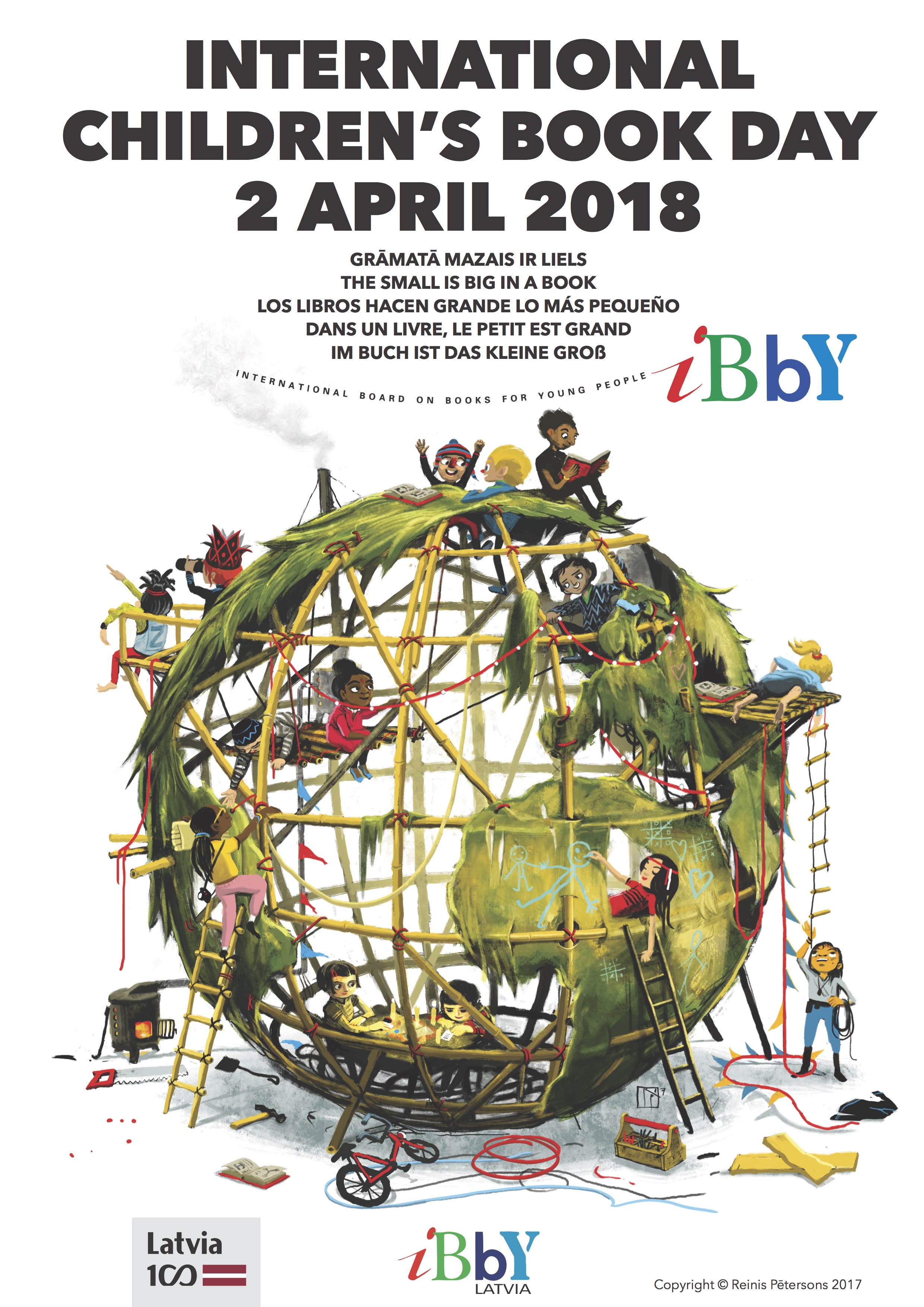
International Children's Book Day


April 2nd, the birthday of Hans Christian Andersen, is the International Children's Book Day (ICBD).

Every year a different country is the international sponsor and writes a message about it.
This year the country is Latvia.
See the poster below, with the message "The small is big in a book".


The poster is downloaded from:  http://www.ibby.org/fileadmin/user_upload/ICBD_2018_POSTER.jpg
As the writer of the message, Inese Zandere, says:

 "A children's book signifies respect for the greatness of the small".


1. Mention the title and the writer of a book which is great for you, so that other people can read it. In a sentence say why it is significant.


2. Fill in the sentence " With a book I can fly to...". to show the million possibilities that books open for us:

e.g. With a book I can fly to the heart of the earth


Friday, April 6, 2018

Two paintings and an article


Look at the two paintings below. 

The first one is  called "Guernica" by the Spanish painter Pablo Picasso.
He wanted to show the suffering from war.

The second one is a transformation of the painting called "Aegean Guernica" by the Bulgarian cartoonist Jovcho Savov. He wanted to show the suffering of refugees.

Now imagine that you are a reporter, in one of these two places. 
Choose the one you like and write an article for your newspaper.
  • Find a short title
  • Say what you saw 
  • Mention something memorable that someone told you.
  • You can mention your feelings / thoughts at the end.


A painting - Diary


Look at this painting. It is called "The Scream". 
It is one of the four versions made by the Norwegian expressionist artist Edvard Munch.

Imagine that you are the person screaming, but you are at home now.
Write a diary entry about your experience:
  • Start with the date
  • Write: "Dear Diary,"
  • Mention what you saw / experienced
  • Say what you did
  • Talk about how you felt
  • Write your name at the end


Music and Creative Writing


Listen to the music in the musical video below.
Do it with your eyes closed.
Try to imagine one/some scene(s) that this music brings to your mind.
Write about it/them.


A poem about an object


First read the poem below, which is about a picture puzzle piece and the possibilities it can have.

"Picture Puzzle Piece" by Shel Silverstein

from his book A light in the attic

One picture puzzle piece
Lyin' on the sidewalk,
One picture puzzle piece
Soakin' in the rain.
It might be a button of blue
On the coat of the woman
Who lived in a shoe.
It might be a magical bean,
Or a fold in the red
Velvet robe of a queen.
It might be the one little bite
Of the apple her stepmother
Gave to Snow White.
It might be the veil of a bride
Or a bottle with some evil genie inside.
It might be a small tuft of hair
On the big bouncy belly
Of Bobo the Bear.
It might be a bit of the cloak
Of the Witch of the West
As she melted to smoke.
It might be a shadowy trace
Of a tear that runs down an angel's face.
Nothing has more possibilities
Than one old wet picture puzzle piece.


Then try to write a short poem of your own about a button you found in the street.
  • Imagine the people it could belong to.
  • Write one sentence/ phrase about every possible owner.
  • Let your imagination run wild.

Ancient toys - A narrative


Look at the pictures below. They show ancient Greek toys, which are now in museums.
The first one shows spinning tops and the second a doll.

Imagine that you are a child in ancient times and one of these toys is yours.
Write a paragraph about it.
Mention:
        • when you got the toy and why
        • how you felt about it
        • where you used to play with it and how
        • if you used to share it with your friends